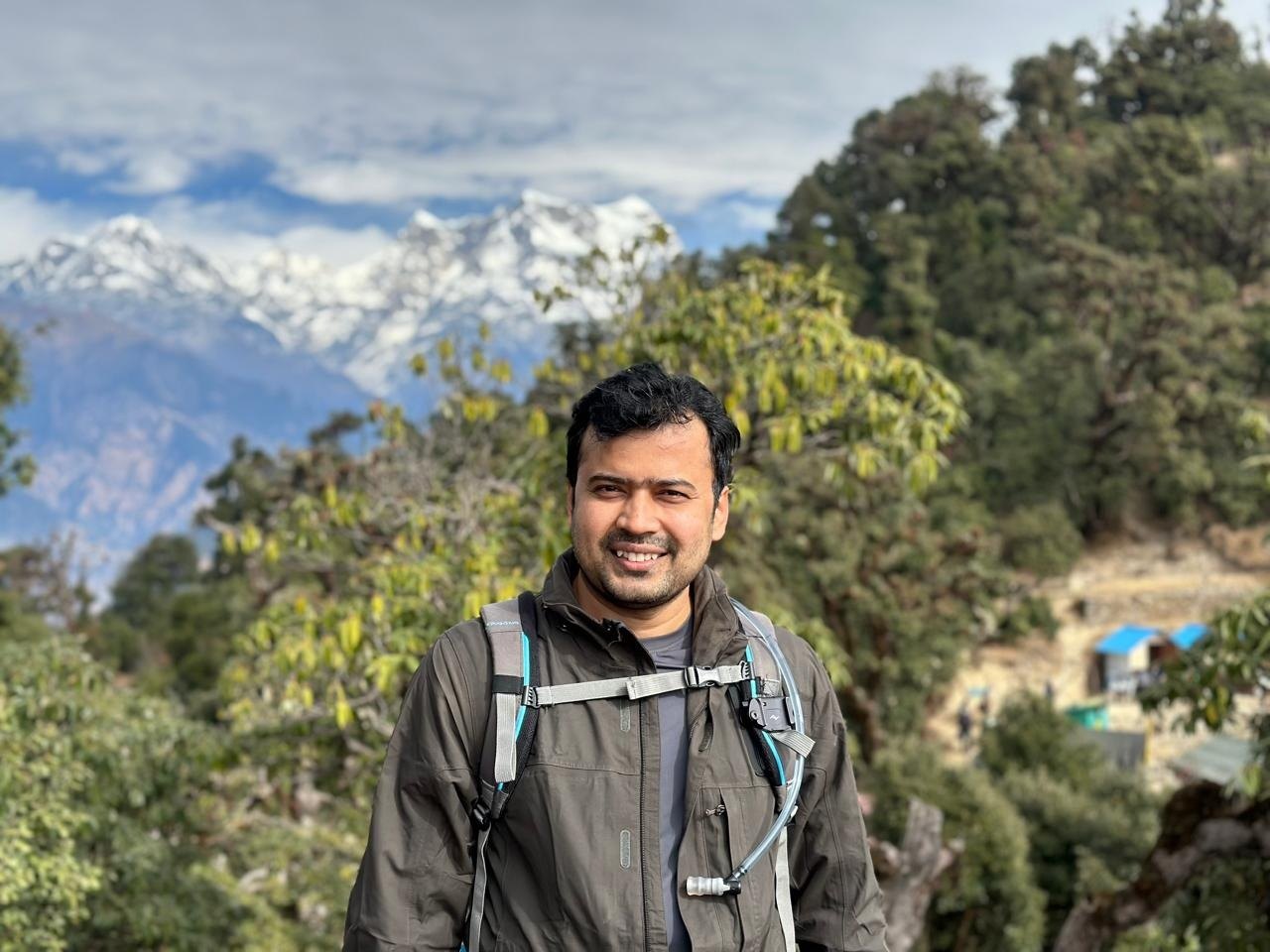
Since 2012, trekking has been a constant in my life, with over 15 treks under my belt to date, an adventure I embark on at least once or twice every year. However, my journey as a trekker began with the Roopkund trek, an unforgettable and life-changing experience.
About the trek
Roopkund, one of India's most sought-after high-altitude treks, is nestled in the Chamoli district of Uttarakhand. This trek is renowned for its stunning natural beauty, but what truly sets it apart is the eerie Roopkund Lake, commonly referred to as Skeleton Lake. Perched at an elevation of approximately 15,500 feet, the lake owes its chilling moniker to the human skeletons that line its edges, revealed when the snow melts. These skeletons are believed to date back to the 9th century, adding a layer of mystique to this already thrilling journey.
The Roopkund trek has long been known to local shepherds and traders, who have used the route for centuries. However, it wasn't until the 1940s, when a forest ranger named Hari Kishan Madhwal stumbled upon the skeletal remains, that Roopkund caught the attention of the broader world. Madhwal's discovery sparked global intrigue, turning Roopkund Lake into a destination not just for trekkers but also for researchers and adventurers eager to unlock its mysteries.
Beyond its enigmatic history, the trek offers breathtaking landscapes, passing through vibrant alpine meadows like the Ali and Bedni Bugyals. While modern trekking organizations have since mapped and developed the route, local communities have always known of its existence, as it weaves through traditional grazing lands that have been used for generations.
The folk story of Roopkund
According to ancient lore, the Roopkund trek is deeply intertwined with the legend of Goddess Nanda Devi, a revered deity in the region. Long ago, Raja Jasdhaval, the king of Kanauj, and his queen, Rani Balampa, embarked on a pilgrimage to Roopkund, following a divine vision. The queen, having dreamt of the goddess, believed that completing the pilgrimage would bless the royal family with the long-desired heir. In reverence to the goddess, the king, accompanied by his queen and a large entourage of musicians, dancers, and servants, set off on the journey.
However, overwhelmed by the grandeur of the mountains, the king's humility gave way to arrogance. The solemn spiritual pilgrimage turned into a celebration filled with music and dancing, disrespecting the sanctity of the goddess. As they neared the area now known as Patthar Nachauni, local sages and priests warned the king against the revelry, reminding him of the sacredness of the region. But the warnings fell on deaf ears, and the procession continued with its joyous celebrations.
Legend says that the goddess, angered by this display of disrespect, cursed the group. As a result, three dancers fell into pits, and the other performers were turned to stone, giving rise to the name "Patthar Nachauni", meaning "Dance of the Stones". Even today, visitors can witness the three pits at this location, believed to be the resting places of the cursed dancers.
Undeterred by the tragedy, King Jasdhaval pushed forward toward Roopkund Lake, accompanied by his pregnant queen and the surviving members of their entourage. But the goddess's wrath had not yet subsided. Upon reaching the sacred lake, instead of receiving blessings or redemption, they were met with their doom. A sudden and fierce hailstorm, with hailstones as large as cricket balls, struck the group. None survived the brutal storm, and their bodies were left scattered around the lake, later preserved by the icy conditions of the high-altitude region.
The aftermath
The skeletons discovered around Roopkund Lake are believed to be the remains of this ill-fated procession, a chilling reminder of the legend. Local folklore holds that the spirits of King Jasdhaval and his party still haunt the area, cursed to wander for eternity because of their failure to respect the goddess Nanda Devi.
Today, the Nanda Devi Raj Jat Yatra, a sacred pilgrimage retracing the steps of the ill-fated king, continues to attract devotees. This trek is undertaken with deep reverence, serving as a solemn reminder of the power of the divine and the consequences of arrogance. The mystical aura of Roopkund, coupled with its haunting history, leaves an indelible mark on all who undertake the journey.
Mythological stories of Roopkund
Story one: Goddess Kali
In the vast tapestry of Himalayan folklore, a powerful yet lesser-known myth ties Roopkund to the divine deities Goddess Kali and Lord Shiva. This story is a dramatic account of the eternal battle between good and evil, where the forces of destruction and protection come face to face in a fierce struggle.
Long ago, the tranquil lands surrounding Roopkund were thrown into chaos by a powerful demon who sought to dominate the sacred mountains and desecrate the spiritual sanctity of the Himalayas. His reign of terror grew so mighty that even the gods trembled before him, as no mortal or divine force seemed capable of stopping his destruction.
Desperate to end the demon's tyranny, the gods summoned Goddess Kali, the fierce and formidable embodiment of divine feminine energy, renowned for her power to obliterate evil. Enraged by the demon's audacity and the suffering he had caused, Kali descended upon the Himalayas, ready to bring an end to his malicious rule.
With wild hair, bloodshot eyes, and a garland of skulls, Kali's terrifying appearance mirrored the intensity of her wrath. Roopkund became the battleground where good and evil clashed. The mountains shook under the force of her battle cries, and each swing of her sword echoed like thunder across the land. For days, the earth trembled as Kali waged war against the demon, determined to destroy him once and for all.
As the battle raged on, Kali's fury grew increasingly uncontrollable. Her power, though aimed at defeating the demon, began to threaten the very land she was protecting. The gods, alarmed by the destruction her wrath might unleash on the sacred region, called upon Lord Shiva for help.
Shiva, the great Mahadeva and Kali's consort in some traditions, understood the peril. To pacify her uncontrolled rage and prevent the destruction of the world, Shiva devised a plan. He appeared at the center of the battlefield in the form of a corpse, lying still and peaceful. His symbolic gesture was meant to absorb her anger and calm her overwhelming energy.
As Kali, in the heat of battle, unknowingly stepped on Shiva's chest, she suddenly realized the presence of her beloved husband. This moment of recognition brought her rage to a halt. Overcome with the realization of her actions, Kali's fury subsided, and she regained control over her immense power. Shiva's intervention restored balance to the world, and the looming devastation was averted.
With the demon defeated and Kali's rage pacified, peace returned to the mountains. According to legend, the blood spilled during the intense battle seeped into the earth, eventually giving birth to Roopkund Lake. Although the waters, once red with the demon's blood, later cleared, the site has retained its eerie and sacred energy.
Even today, Roopkund is revered as a place where divine forces collided. It is believed that the skeletons scattered around the lake are not just remnants of an ancient tragedy, but perhaps of those who witnessed or were touched by Kali's fierce power during the battle. The lake stands as a symbol of the balance between destruction and protection, a place where the cosmic energies of the universe converged in a powerful and eternal struggle.
Story two: the beheading of Ganesha
In Hindu mythology, there exists a poignant tale of how Lord Ganesha, the beloved elephant-headed god, came into being. This story is centered on the themes of obedience, divine grace, and rebirth.
One day, Devi Parvati, wife of Lord Shiva, was preparing for a bath. Wishing for privacy, she created a guardian from the dust of her own body, her son, Lord Ganesha. She entrusted him with a task: to guard the entrance and not allow anyone to disturb her while she bathed.
During Parvati's time in seclusion, Lord Shiva returned to their abode. Unaware of Ganesha's identity and the fact that he was his own son, Shiva attempted to enter. However, Ganesha, obeying his mother's orders, stood firm and refused to let Shiva pass. Infuriated by this defiance and not recognizing the boy before him, Shiva, in a moment of rage, drew his trident and swiftly severed Ganesha's head.
When Parvati emerged and saw what had transpired, she was devastated. Overcome with grief and anger, she demanded that Shiva restore their son to life. Realizing his grievous mistake and wanting to ease Parvati's sorrow, Shiva instructed his followers to find the head of the first living being they encountered. They soon returned with the head of an elephant. Without delay, Shiva placed the elephant's head on Ganesha's lifeless body, breathing life back into him. Thus, Ganesha was reborn, transformed into the elephant-headed god who is now revered as the remover of obstacles and the lord of beginnings.
Kalu Vinayak Temple
The Kalu Vinayak Temple, situated near the Roopkund trek, is said to mark the spot where Lord Ganesha was resurrected with the elephant's head. Trekkers and pilgrims visiting the Roopkund region often stop at this ancient temple to seek Lord Ganesha's blessings, praying for a successful and obstacle-free journey.
This story stands as a powerful symbol of devotion, obedience, and the transformative power of divine grace, with Ganesha being forever revered as Vinayak, the god who clears paths and removes difficulties for those who seek his blessings.
My trekking journey
Roopkund was my first official trek back in 2012. A group of nine friends, including myself, spontaneously decided to take on the challenge without fully understanding the technical difficulties or the sheer endurance required to reach 15,500 feet above sea level. Our preparation was minimal, some two to three weeks of running to build stamina. The bulk of our effort went into creating a list of essentials and making sure each of us was fully equipped. It was the first trek for all of us, and excitement was high.
The hardest part, however, wasn't the trek itself. It was getting everyone on board. Since we all worked in the same organization and team, aligning schedules and commitments was no small feat. But somehow, we managed to pull it off.
We booked our trek through one of the leading trekking companies specializing in Himalayan expeditions. They were to pick us up from Kathgodam railway station, the starting point of our adventure. Our train was set to depart from Nizamuddin railway station, which became our gathering spot, as all of us were based in the NCR region.
Day 01Kathgodam to Lohajung (Base Camp)
Our train reached Kathgodam station earlier than expected, and we soon boarded the transport organized by the trekking company for the drive to our base camp in Lohajung. Nestled in the Chamoli district of Uttarakhand, Lohajung is a small, picturesque village located at an altitude of around 2,300 meters (7,500 feet), approximately 210 kilometers and a 10-hour drive from Kathgodam railway station.
We arrived at the base camp around 6 p.m., with darkness already settling in and everyone feeling the exhaustion of the long journey. By 8 p.m., our group gathered for the all-important briefing session, a must-have before any trek, as it prepares you both mentally and physically for the days ahead.
The session began with simple introductions and inquiries about prior trekking experience. Since this was a high-altitude trek, we were reminded of the importance of proper layering for the unpredictable weather. The camp leader explained that for moderately cold conditions, two layers of clothing would suffice, but for more extreme situations, four to six layers were essential.
We were then introduced to the structure of our trekking team. Every team has a Trek Leader, who ensures the group's well-being and keeps shuffling between the front and the back to check on everyone. Then there's the Trek Guide, who leads the way, being well-versed with every twist and turn of the route. Finally, there's the Sweeper, whose job is to stay at the back and ensure no one is left behind.
After the briefing, we had dinner and quickly retired for a much-needed rest, preparing ourselves for the unfamiliar challenges of the next five days.
Lohajung (7,662 ft) to Didna Village (8,045 ft)
Didna Village, nestled in the Chamoli district, is a hidden gem situated in the mountainous terrain. This quaint village is known for its mixed forests and scenic meadows. Silk worm rearing is a common occupation here, alongside farming, where villagers cultivate potatoes and rear goats and cows. The village offers a picturesque view of farms lining the ridge, with small houses scattered randomly across the landscape. Surrounded by dense green jungle, Didna is home to around 30 households, making it a peaceful and serene retreat.
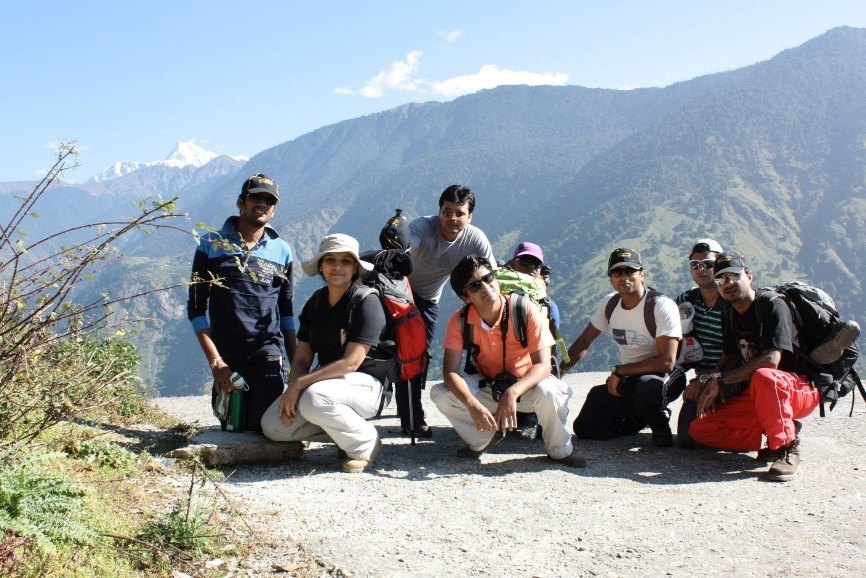
We left the base camp around 9 a.m. after breakfast, pausing for a group photo before beginning our journey to Didna. The distance to cover was 6.5 kilometers, and we arrived at the village around 1 p.m. After lunch, we set out to explore the local surroundings, soaking in the beauty of this charming mountain village. The first day's ascent was a clear preview of the challenges ahead, giving us a realistic taste of what was to follow in the days to come.
Didna Village (8,045 ft) to Bedni Bugyal (12,818 ft)
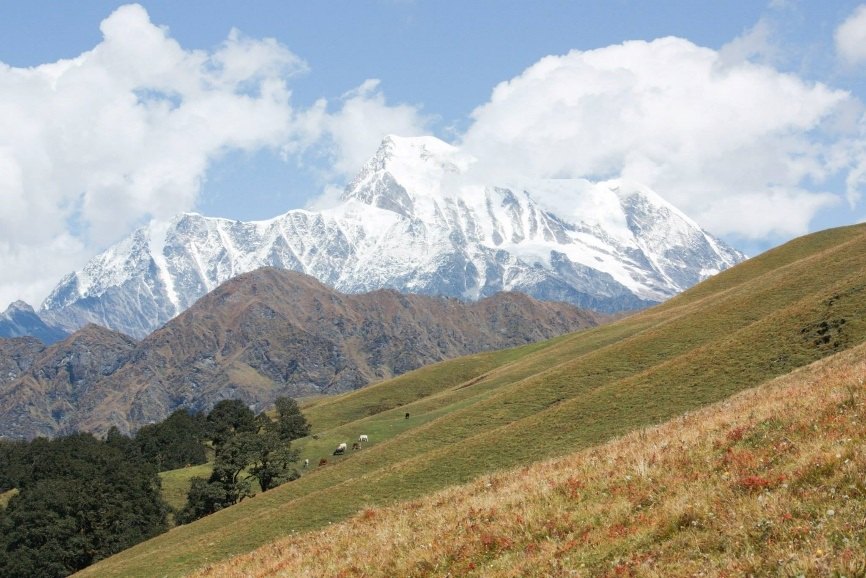
Bedni Bugyal sits majestically at an altitude of 12,818 ft, perched atop a mountain surrounded by thick oak, rhododendron, and birch forests. This vast, grassy meadow offers an enchanting panorama of misty winds and vibrant landscapes, with horses and cattle grazing peacefully. The backdrop of Trishul Peak and Mrigthuni Peak adds to the mesmerizing beauty of the area, making it one of the most breathtaking locations on the trek.
I woke up at 5:30 a.m. to a fascinating view of the mountains just outside my window. After freshening up, we gathered for breakfast around 7 a.m., which consisted of delicious parathas. We were given packed lunches to carry with us for the journey ahead.
Our trek began at 8 a.m., and we found ourselves trekking through a variety of terrains, muck, rocks, oak forests, and expansive meadows. As we passed miles and miles of grassy fields stretching endlessly, it felt as though we were walking through a dream.
This day felt like the easiest so far. Our bodies were steadily acclimatizing to the increased physical demands, and the beauty of the trail made the journey more enjoyable. We stopped for lunch amid the meadows, savouring the food in the calm of nature before continuing.
As we neared Bedni Bugyal, it was a relaxing moment when we spotted our campsite in the distance, visible from miles away. After much huffing and puffing, we finally reached the ridge of the mountain, where a welcoming rhododendron forest stood tall, as if greeting us. The sheer beauty of Bedni Bugyal was overwhelming, vast lands carpeted with tiny patches of grass, stunning and serene. Words fell short in describing the absolute magic of this place; it was, without a doubt, the most beautiful location of the entire trek.
By the time we arrived, a light drizzle had begun to fall, adding to the mystique of the surroundings. We were served hot khichdi, a comforting meal after the long walk. Despite the weather, we set out for an acclimatization walk, which proved to be a bit tough due to the conditions. Dinner was served at 7:30 p.m., and by 9:30 p.m., we retired to our tents, exhausted but filled with a sense of awe at the day's beauty.
Bedni Bugyal (12,818 ft) to Bhagwabasa (14,117 ft) via Patar Nachauni
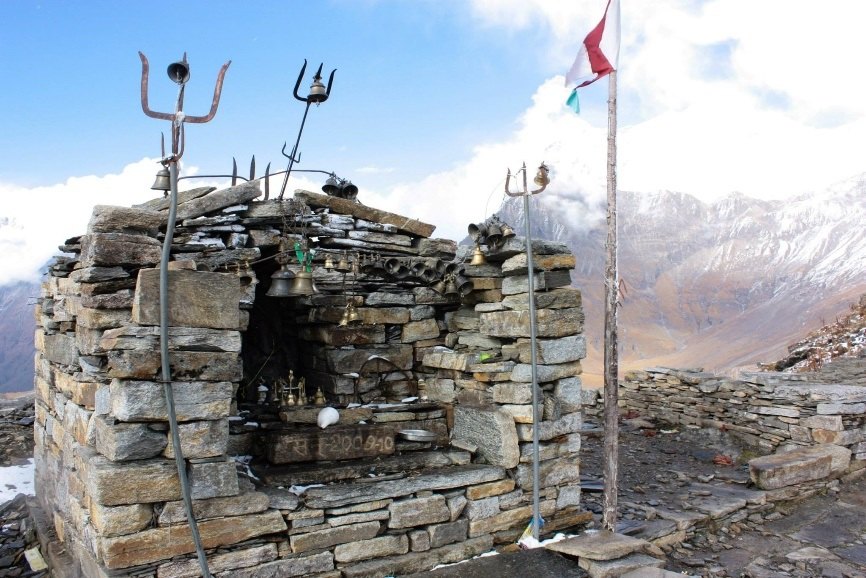
Bhagwabasa is a noticeably isolated location, characterized by stone blocks scattered along the trail. Abandoned stone huts, which were once rented out to trekkers, can still be seen, though most are now in ruins. Despite their state, these huts offer a unique charm amidst misty backdrops and abundant cloud cover. The peaks of Nanda Ghunti, Trishul, and Kali Dak stand tall and clearly visible from this point.
This was one of the toughest days of the trek, covering 12 kilometers. The trek began with a grueling uphill climb, which required technical assistance for a few trekkers. The trail itself was narrow, wrapping around the valley, with stunning views of lush green meadows and small hills along the way. We steadily made our way to Patar Nachauni, the legendary location from the folk tale we had learned about, which served as our lunch point. We arrived there around 1 p.m.
In previous treks, Patar Nachauni was the midpoint for a lunch break. Nowadays, it has become a campsite, where trekkers often stay the night before continuing their journey. After lunch, within an hour, the effects of the altitude became apparent. Oxygen levels dropped sharply, and many of us experienced breathlessness and fatigue. Constant hydration and taking small, measured steps became essential to counter the challenges.
The trail started to ascend steeply as soon as we left Patar Nachauni. The zigzag path offered excellent views of the valley below, but it was a true test of endurance. By this point, the trek became more of a mental challenge than a physical one. Even after 12 years and numerous treks, the memory of this ascent still haunts me, each step was a battle, both physically and mentally.
At the top of the ridge lies Kalu Vinayak, a temple dedicated to Lord Ganesha, which we had learned about in the mythological tale. The mere thought of climbing further seemed daunting, but we pushed forward. The landscape had drastically changed; we had left the meadows behind and entered a harsh, barren terrain where little grew. One incident that remains etched in my memory is when our guide reached the top of the ridge and blew the conch. The sound resonated through the air, filling the atmosphere with a beautiful, positive energy.
From Kalu Vinayak to Bhagwabasa, our final campsite, the trail leveled out into a relatively flat zigzag path. We finally reached Bhagwabasa around 4 p.m., where we were welcomed with hot tea and maggi, a perfect treat after the long day.
The water point, a narrow stream, was about 500 meters away, and the team needed help fetching water in buckets. A few of us volunteered to assist the organizing team. Just as we finished, snow began to fall lightly, and we rushed back to the campsite, seeking shelter in our tents. We were playing games in the tent when the peaceful snowfall turned into a snowstorm. We quickly had to deflate our tents and secure them with rocks to prevent them from being blown away. The kitchen tent, being larger, required a team effort to hold it down.
After securing the camp, we had an early dinner and retired to our tents as soon as the weather stabilized. It was a day full of challenges, but the sense of accomplishment was immense.
Bhagwabasa (14,117 ft) to Roopkund Lake (15,500 ft) and back to Bedni
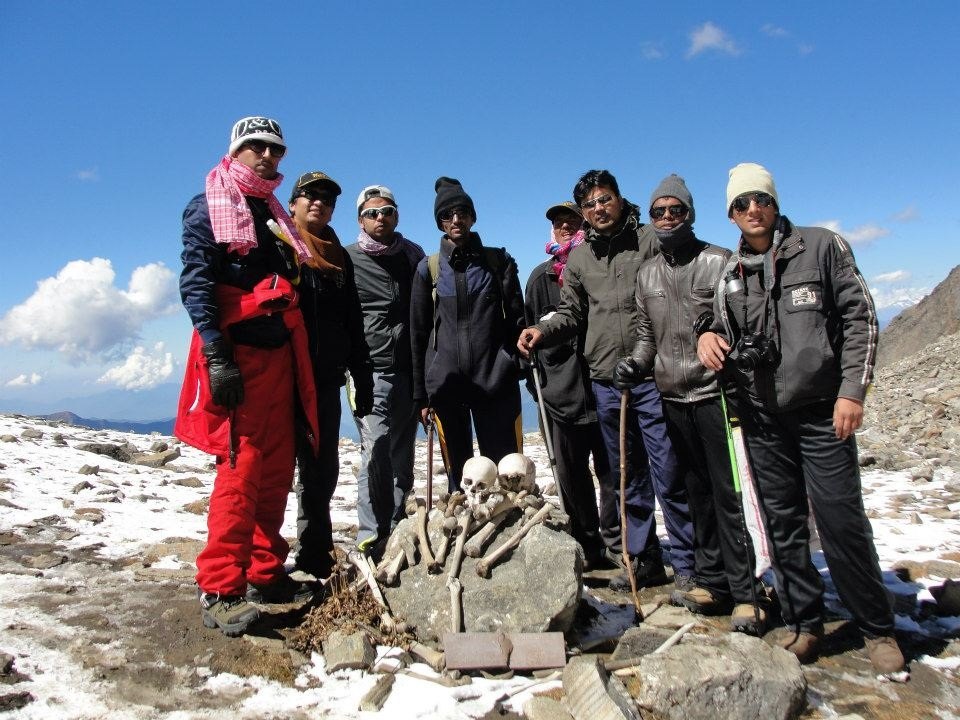
Roopkund Lake, also known as the "Riddles of the Dead" or "Skeleton Lake", holds a captivating history. The lake is home to around 200 human skeletons, first discovered by a British forest guard in 1942. Initially, it was believed that these were the remains of Japanese soldiers from World War Two, but radiocarbon dating confirmed that the skeletons date back to the 9th century, nearly 1,200 years old. Researchers later concluded that these were pilgrims who died from fatal blows to the back of their heads, caused by large hailstones. Along with the skeletons, wooden artifacts, iron spearheads, leather slippers, and rings were also uncovered, deepening the lake's mystery.
We were all up by 4 a.m., packing our gear and preparing for the day's journey. By 5 a.m., after gearing up and completing the daily headcount, we were ready to set off for Roopkund Lake.
Our group, originally consisting of 30 trekkers, was now down to 29. One person was missing. After everyone paired up with their tent mates, we realized who it was. The entire camp began calling out his name and searching around, but he was nowhere to be found. Since we were camped on a ridge, there was no place to go except along the trail.
After two hours of searching, we saw someone approaching from the previous day's trail. It was the missing trekker. He had been struck by acute mountain sickness, which can affect people in various ways. He had gone out for a nature call around 4 a.m. and, in his disoriented state, descended down the ridge without realizing it. After wandering for 30 minutes, he recognized the mistake and made his way back.
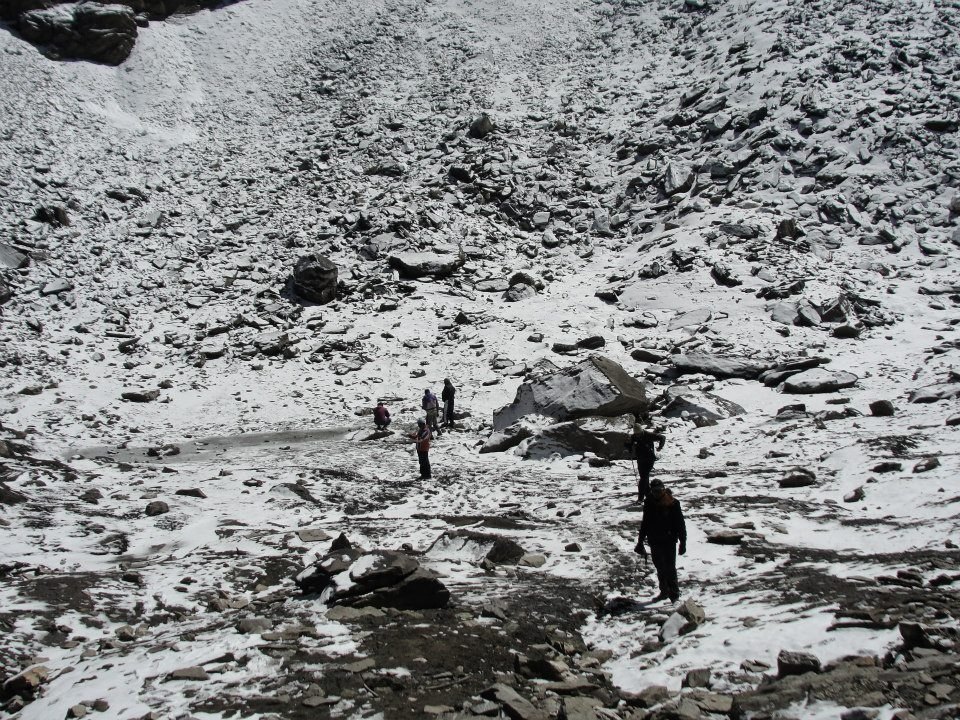
Now, with the sun out, we had to ascend in melting snow, which had become slippery. Equipped with crampons and trekking poles, essential for this terrain, we started the climb. As we gained altitude, the trek became tougher, and the thin air made every step more exhausting. Roopkund Lake, though close, felt tantalizingly out of reach.
After several hours of grueling trekking, we finally arrived at the lake. The sight before us was indescribable, majestic, partially snow-covered black mountains surrounded the sky-blue lake, which seemed to play hide-and-seek with the drifting clouds. The famed skeletons, remnants of a 1,200-year-old mystery, lay scattered around the lake, though most skulls had been taken by researchers. The eerie, divine, and mysterious atmosphere was overwhelming.
At one point, I stopped taking pictures, realizing that no camera could truly capture the awe of that moment. The magnitude of the mountains and the lake rendered me speechless, their grandeur impossible to fully grasp.
Amid the few remaining skulls and bones, I felt a sense of reverence and wonder. Words cannot convey the feeling of standing at such a haunting yet sacred site.
By noon, snowfall began, and with 17 kilometers ahead of us to reach Bedni Bugyal, we had no time to linger. The trek back was challenging. We spent three hours trudging through snowfall with limited visibility and biting cold. As darkness fell, the trail became treacherous. Many of us had forgotten to carry headlamps or torches, forcing us to navigate the narrow, rocky paths in near-complete darkness for two to three hours.
Finally, after a long and exhausting day, we reached the Bedni Bugyal campsite. Exhausted, we had a quick dinner before everyone crashed into their tents, utterly spent from the day's journey.
Bedni Bugyal to Lohajung via Wan, and back to Kathgodam
The next morning, we woke to clear weather and prepared for the final leg of our trek. Before leaving, we took a moment to thank everyone, reluctant to let go of the beautiful journey. I descended as slowly as possible, savoring each step, not wanting this incredible experience to end.
As we made our way down, something heartwarming happened. Every child we passed greeted us with folded hands and a smile, saying "Namaste, kuch meetha dedo". Their innocence and joy were overwhelming, filling my heart with an immense sense of love. I handed over whatever treats I had, delighted to see their radiant smiles in return.
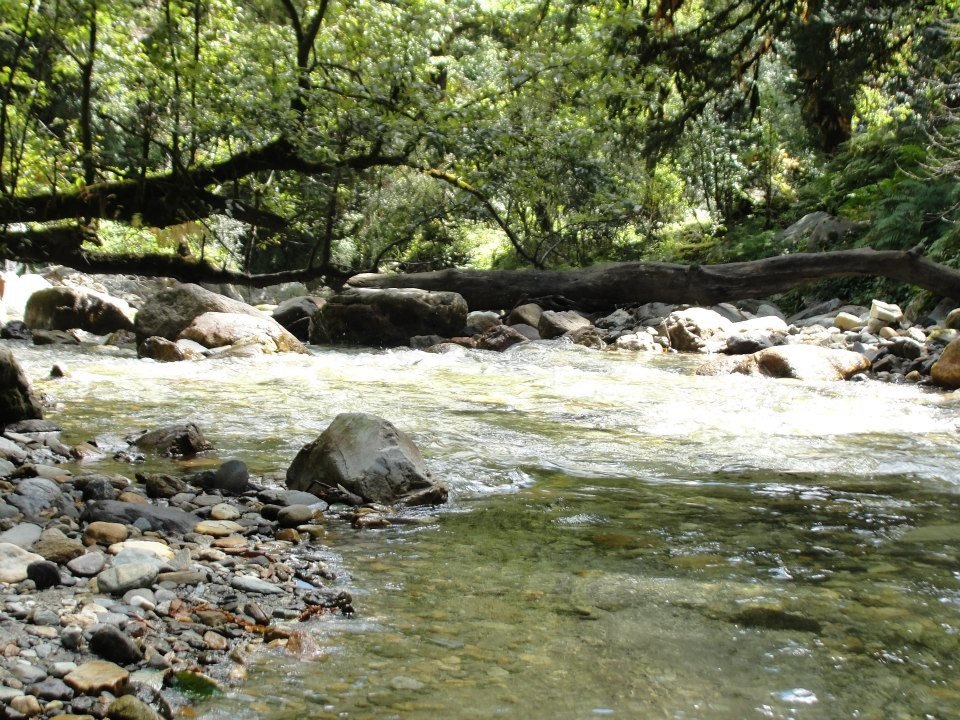
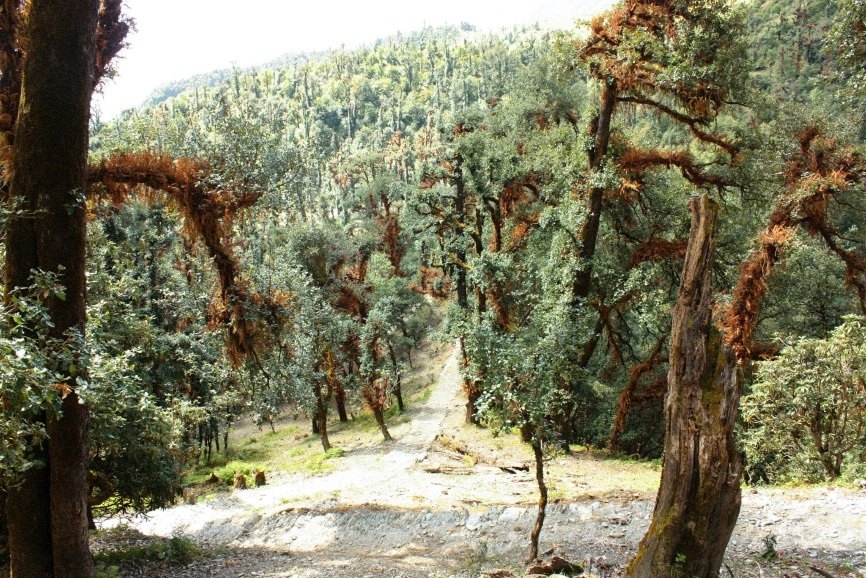
We stopped for lunch by the Neelganga River, a breathtaking spot where dipping my legs into the icy cold water was pure bliss, offering a moment of relaxation and indulgence. The beautiful bridge we crossed over the Neel Ganga added to the charm of the journey. The trail through the dense forest, with towering oak and rhododendron trees, allowed only slivers of sunlight to pierce through the canopy, casting an enchanting glow on the forest floor.
On the way down, we were treated to a refreshing juice made from local flowers, adding a unique touch to the descent. As we continued our walk toward Wan, the highest point in the area with motor connectivity, we marveled at the variety of Himalayan vegetation. We came across the vibrant Buras flowers, wild berries, strange-looking fruits, and other fascinating flora. Particularly striking were the massive Cyprus trees, their trunks so wide that it would take about six people holding hands to circle around them. These ancient trees, I learned, were centuries old, standing as silent witnesses to the passage of time.
By late evening, we reached our final camp at Lohajung. The ride from Wan to Lohajung was bumpy, crossing flowing streams and navigating sharp curves, signaling that the journey was nearing its end.
The final day was a drive back from Lohajung to Kathgodam, marking the end of our unforgettable journey. We soaked in the last glimpses of the mountains during the drive, each turn reminding us of the adventure we had just completed. Once we arrived at Kathgodam, we boarded our train back to Delhi, filled with memories and stories that would stay with us for a lifetime.
Looking back
Reflecting on this journey, the Roopkund trek was not just an adventure but a deeply enriching experience. From the breathtaking landscapes and challenging ascents to the warmth of the locals and the camaraderie among fellow trekkers, every moment left a lasting impression. The mysteries of the Skeleton Lake, the beauty of Bedni Bugyal, and the unforgettable experiences along the way will forever be etched in my memory. This trek taught me the importance of resilience, humility, and the awe-inspiring power of nature. As I look back, I am filled with gratitude for the journey and all it brought into my life.